
TNPSC Books
-
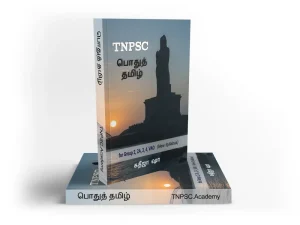
 TNPSC பொதுத் தமிழ் Book - for Group 2, 2A, 3, 4 & VAO
Original price was: ₹1,000.00.₹850.00Current price is: ₹850.00.
-
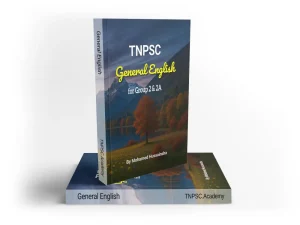
TNPSC General English Book - for Group 2 & 2A
Original price was: ₹1,000.00.₹850.00Current price is: ₹850.00.
Group 1 Courses

TNPSC Group 1 - Test Series - 2019
Original price was: ₹3,500.00.₹2,800.00Current price is: ₹2,800.00. 542
Class Tests
PRIVATE 67Group 1 | Postal and Online Test Series | 2022
Original price was: ₹3,200.00.₹2,800.00Current price is: ₹2,800.00. 88




Group 2 & 2A Courses
TNPSC Group 2 and 2A - Test Series - 2019
Original price was: ₹2,400.00.₹1,800.00Current price is: ₹1,800.00. 527TNPSC Group 2 and 2A MAINS - 2022
PRIVATE 344TNPSC Group 2 and 2A - Test Series - 2019 - தமிழ்
Original price was: ₹2,400.00.₹1,800.00Current price is: ₹1,800.00. 175Class Tests
PRIVATE 67






TNPSC – PROBABALITY
Probabality:
Random experiment:
An experiment is called random experiment if it satisfies the following two conditions:
(i) It has more than one possible outcome.
(ii) It is not possible to predict the outcome in advance.
Sample space:
Consider the experiment of rolling a die. The outcomes of this experiment are 1, 2, 3, 4, 5 or 6.
The set of outcomes {1, 2, 3, 4, 5, 6} is called the sample space of the experiment.
Event:
The set representing the desired outcome of a random experiment is called an event. Event is a subset of the sample space. Consider the experiment of tossing a coin two times. An associated sample space S = {HH, HT, TH, TT}
Now suppose that we are interested in those outcomes which correspond to the occurrence of exactly one head. We find that HT and TH are the only elements of S corresponding to the occurrence of this happening (Event). These two elements form the set E = {HT, TH}.
Defenition of Probabality:
If in an experiment there are “n” occurrences out of which “m” occurrences are favourable to a particular event E, then the probability of the event E is defined as P(E) = m/n.
Probability = Favourable outcomes (m) / Sample Space (n)