
TNPSC Books
-
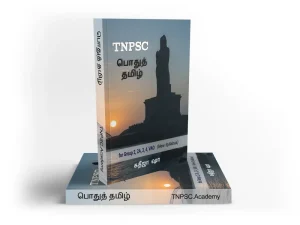
 TNPSC பொதுத் தமிழ் Book - for Group 2, 2A, 3, 4 & VAO
Original price was: ₹1,000.00.₹850.00Current price is: ₹850.00.
-
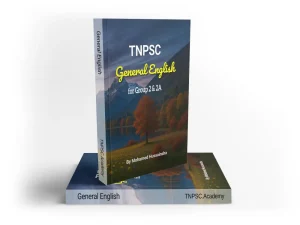
TNPSC General English Book - for Group 2 & 2A
Original price was: ₹1,000.00.₹850.00Current price is: ₹850.00.
Group 1 Courses

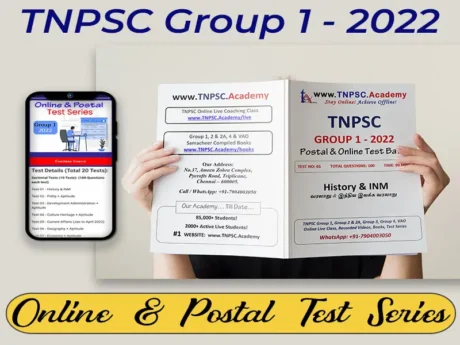
Group 1 | Postal and Online Test Series | 2022
Original price was: ₹3,200.00.₹2,800.00Current price is: ₹2,800.00. 88Class Tests
PRIVATE 67
TNPSC Group 1 - Test Series - 2019
Original price was: ₹3,500.00.₹2,800.00Current price is: ₹2,800.00. 542




Group 2 & 2A Courses
TNPSC Group 2 and 2A MAINS - 2022
PRIVATE 344TNPSC Group 2 and 2A - Test Series - 2019
Original price was: ₹2,400.00.₹1,800.00Current price is: ₹1,800.00. 527Class Tests
PRIVATE 67TNPSC Group 2 and 2A - Test Series - 2019 - தமிழ்
Original price was: ₹2,400.00.₹1,800.00Current price is: ₹1,800.00. 175






www.tnpsc.academy – TNPSC Current Affairs April 10, 2020 (10/04/2020)
Download as PDF
Topic: Latest Reports and Events, Profile of States
Uranium Contamination in Ground Water
A new study conducted by the University of Manchester, UK and Mahavir Cancer Institute and Research Centre, Phulwari sharif in Patna has found uranium contaminating the groundwater in 10 districts of Bihar.
Key findings:
Supaul, Gopalganj, Siwan, Saran, Patna, Nalanda, Nawada, Aurangabad, Gaya and Jehanabad are the 10 districts.
Uranium concentrations are elevated mostly in the North West-South East band along and to the east of Gandak river and running south of the Ganga river.
The maximum uranium content was in Supaul, 80 microgram of uranium per litre of water.
What is the acceptable limit?
The Indian Standard IS 10500: 2012 for Drinking Water specification has specified the maximum acceptable limits for radioactive residues as alpha and beta emitters, values in excess of which render the water not suitable.
These requirements take into account all radioactive elements including uranium. No individual radioactive elements have been specifically identified.
As per Bureau of Indian Standard (BIS), maximum permissible limit of Uranium is 0.03 mg/l (as per WHO provisional guidelines) in all drinking water standards after following due process.
Affected states:
A report brought out by Duke University, USA in association with Central Ground Water Board and State Ground Water departments states that Andhra Pradesh, Chhattisgarh, Gujarat, Haryana, Himachal Pradesh, Jharkhand, Karnataka, Maharashtra, Odisha, Punjab, Rajasthan, Tamil Nadu, Telangana, Uttar Pradesh, West Bengal and Jammu & Kashmir have localised occurrence of Uranium concentration.
What is Uranium?
Uranium is weakly radioactive and remains so because of its long physical half-life (4.468 billion years for uranium-238). The biological half-life (the average time it takes for the human body to eliminate half the amount in the body) for uranium is about 15 days.
It is a naturally occurring element found in low levels within all rock, soil, and water. This is the highest-numbered element to be found naturally in significant quantities on earth.
It is considered to be more plentiful than antimony, beryllium, cadmium, gold, mercury, silver, or tungsten. It is about as abundant as tin, arsenic or molybdenum.
_
Topic: Profile of States, Public Awareness and General Administration
Gamosa
The COVID 19 pandemic has made the ubiquitous gamosa, a decorative cotton towel, evolve from memento to mask.
What is Gamosa?
The Gamosa is an article of significance for the people of Assam. It is generally a white rectangular piece of cloth with primarily a red border on three sides and red woven motifs on the fourth.
Assam has traditionally had two types of gamosas — the ukaor plain kind used to wipe sweat or dry the body after a bath, and the phulam, which is decorated with floral motifs to be gifted as a memento or during festivals such as Bihu.
The gamosa’s graph as a symbol of protest rose during the anti-foreigners Assam Agitation from 1979 to 1985. The extremist United Liberation Front of Asom too used the towel with “revolutionary” motifs.
_
Topic: Profile of States, Public Awareness and General administration
Operation Shield to fight Covid-19
Operation SHIELD Announced by Delhi Government. SHIELD stands for sealing, home quarantine, isolation and tracing, essential supply, local sanitation and door-to-door checks.
It will be implemented in 21 localities identified as containment zones in Delhi.
_
Topic: World Organizations, Latest Reports and Events
“State of the World’s Nursing” report
WHO, along with the International Council of Nurses (ICN) and the Nursing Now campaign, has released a report titled, “State of the World’s Nursing”.
Key finding:
Globally, there are roughly 36.9 nurses per 10,000 people, with variations within and across regions.
There are almost 10 times more nurses in the Americas than in the African region. While there are 83.4 nurses per 10,000 population in the former, there are 8.7 nurses per 10,000 population in the latter.
By 2030, there will be a shortage of over 5.7 million nurses worldwide.
The largest shortfall in absolute numbers is in the South-East Asian region, while in the Americas and Europe, the problem is different since they are facing an ageing nursing workforce.
Moreover, a number of high-income countries in Europe, the Eastern Mediterranean and American regions are “exclusively” dependent on migrant nurses.
As nurses and other medical workers are at the frontlines of this global pandemic, some of the key issues they face include shortages of personal protective equipment (PPE) including face masks, eye-protective gear and gloves, and also the psychological stress faced by some medical staff.
What needs to be done?
Governments should invest in nursing education, jobs and leadership. Some of these measures include remunerating nurses according to the prevalent local, national and international labour market conditions.