
TNPSC Books
-
 TNPSC General English Book - for Group 2 & 2A
Original price was: ₹1,000.00.₹850.00Current price is: ₹850.00.
-
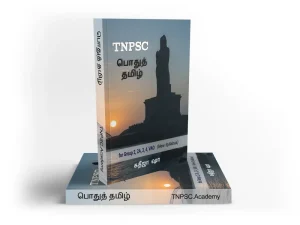
TNPSC பொதுத் தமிழ் Book - for Group 2, 2A, 3, 4 & VAO
Original price was: ₹1,000.00.₹850.00Current price is: ₹850.00.

Group 1 Courses

TNPSC Group 1 - Test Series - 2019
Original price was: ₹3,500.00.₹2,800.00Current price is: ₹2,800.00. 542
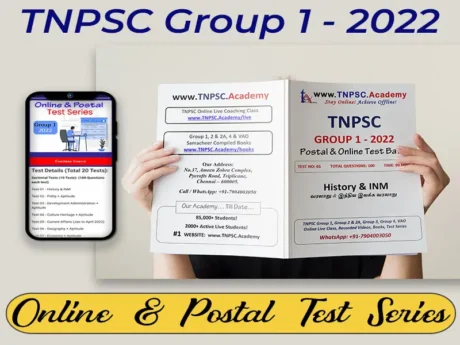
Group 1 | Postal and Online Test Series | 2022
Original price was: ₹3,200.00.₹2,800.00Current price is: ₹2,800.00. 88Class Tests
PRIVATE 67




Group 2 & 2A Courses
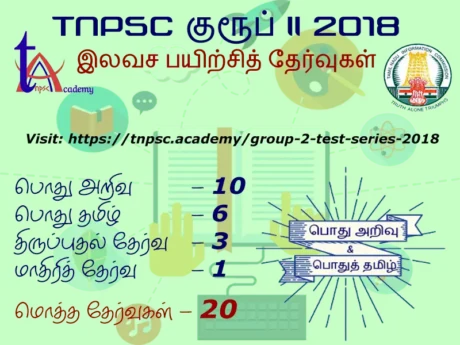
TNPSC Group 2 and 2A - Test Series - 2019 - தமிழ்
Original price was: ₹2,400.00.₹1,800.00Current price is: ₹1,800.00. 175TNPSC Group 2 and 2A MAINS - 2022
PRIVATE 344TNPSC Group 2 and 2A - Test Series - 2019
Original price was: ₹2,400.00.₹1,800.00Current price is: ₹1,800.00. 527Class Tests
PRIVATE 67




www.tnpsc.academy – TNPSC Current Affairs April 15, 2020 (15/04/2020)
Download as PDF
Topic: Profile of States, General Administration, Latest Diary of Events
Nihangs
Recent Patiala incident in which a group of Nihangs attacked a Punjab police party and chopped off the hand of an assistant sub-inspector when stopped for a curfew pass, and the subsequent seizure of weapons and narcotics, has put the spotlight on the Nihangs.
Who is a Nihang?
Nihang is an order of Sikh warriors. They are characterised by blue robes, antiquated arms such as swords and spears, and decorated turbans surmounted by steel quoits.
_
Topic: Latest International Events
Measles
As per UNICEF and WHO, around 117 million children worldwide risk contracting measles because dozens of countries are curtailing their vaccination programmes as they battle COVID-19.
What’s the issue?
Currently 24 countries, including several already dealing with large measles outbreaks, have suspended widespread vaccinations.
The coronavirus pandemic, which has necessitated many prevention measures including strict lockdowns, has kept infants from getting routine immunisation services from some other diseases such as polio, yellow fever and cholera.
_
Topic: Current Socio-Economic Issues, Profile of States
What is pool testing of Corona?
Stating that the number of COVID-19 cases in India is rising, the Indian Council of Medical Research (ICMR) is now advising the feasibility of using pooled samples for molecular testing of patient samples. The council has said that it is critical to increase the numbers of tests conducted by laboratories. The advisory is aimed at increasing capacity of the laboratories to screen increased numbers of samples using molecular testing for COVID-19 for the purpose of surveillance.
How does it work?
A pooled testing algorithm involves the PCR screening of a specimen pool comprising multiple individual patient specimens, followed by individual testing (pool de-convolution) only if a pool screens positive. As all individual samples in a negative pool are regarded as negative, it results in substantial cost savings when a large proportion of pools tests negative.
What the ICMR has recommended?
As per ICMR, preferable number of samples to be pooled is five, though more than two samples can be pooled, but considering higher possibility of missing positive samples with low viral load, it is strongly discouraged to pool more than five samples, except in research mode.
Also, the study has recommended that it should be used only in areas with low prevalence of COVID-19 (initially using proxy of low positivity of less than 2% from the existing data).
In areas with positivity of 2-5%, sample pooling for PCR screening may be considered only in community survey or surveillance among asymptomatic individuals, strictly excluding pooling samples of individuals with known contact with confirmed cases and health care workers (in direct contact with care of COVID-19 patients). Sample from such individuals should be directly tested without pooling.
Why we need pool testing?
This will reduce the total test kits used to examine patients and treat them. It is also expected to trim the work at the laboratories testing these samples.
International researchers suggest that pooling test samples is cost effective, especially for the countries with limited resources. It can be used to prevent community spread of the disease.
UP has become the first state to start pool testing:
On April 14, 2020, the ICMR (Indian Council of Medical Research) gave permission for the state of Uttar Pradesh to start pool testing of COVID-19. With this, UP has become the first state to start pool testing.
_
Topic: Latest inventions on Science and Technology
“COVSACK” developed by DRDO to combat COVID-19
The Defence Research and Development Organization (DRDO) has developed COVSACK to receie samples from COVID-19 infected patients. The COVSACK is COVID-19 Sample Collection Kiosk.
The COVSACK was developed by consulting doctors in Employees State Insurance Corporation (ESIC).
About COVSACK :
A patient walks into the Kiosk cabin and a health care professional from outside the cabin collects samples with oral swabs. After the patient leaves the cabin, four nozzle sprayers spray disinfectants mist for around 70 seconds. Further, the cabin is flushed with water and UV light.
_
Topic: Public Awareness and General Administration
Fit India Active Day Programme launched under Fit India Movement
Government of India launched Fit India Active Day Programme. The programme was launched under the flagship initiative of GoI called “Fit India”.
Key facts:
The Ministry of AYUSH has issued guidelines to implement the Fit India Active Day Programme. The programme is launched to make sure children practice fitness even when they stay home. The programme also intends to create immunity against COVID-19.
Live sessions are to be conducted under the program. These live sessions shall be accessed by students through Instagram and Facebook. The programme has been launched under the partnership of CBSE (Central Board of Secondary Education).