
TNPSC Books
-
 TNPSC General English Book - for Group 2 & 2A
Original price was: ₹1,000.00.₹850.00Current price is: ₹850.00.
-
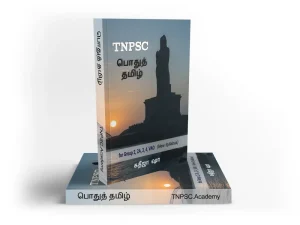
TNPSC பொதுத் தமிழ் Book - for Group 2, 2A, 3, 4 & VAO
Original price was: ₹1,000.00.₹850.00Current price is: ₹850.00.

Group 1 Courses

TNPSC Group 1 - Test Series - 2019
Original price was: ₹3,500.00.₹2,800.00Current price is: ₹2,800.00. 542
Group 1 | Postal and Online Test Series | 2022
Original price was: ₹3,200.00.₹2,800.00Current price is: ₹2,800.00. 88Class Tests
PRIVATE 67




Group 2 & 2A Courses
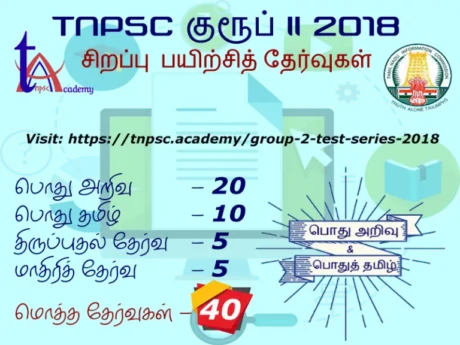
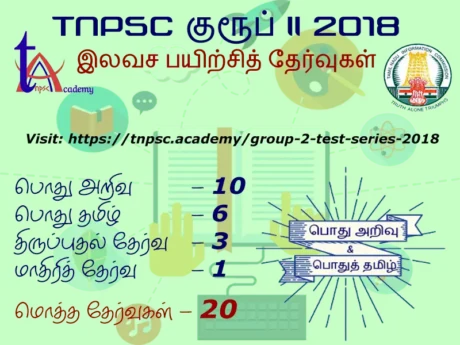
TNPSC Group 2 and 2A - Test Series - 2019 - தமிழ்
Original price was: ₹2,400.00.₹1,800.00Current price is: ₹1,800.00. 175Class Tests
PRIVATE 67TNPSC Group 2 and 2A MAINS - 2022
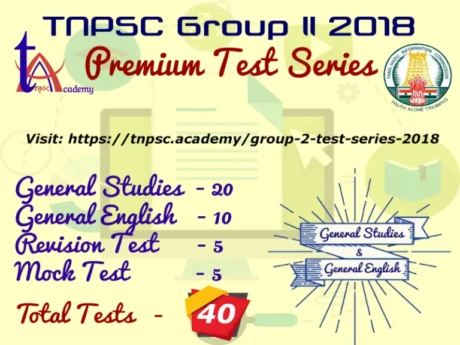
PRIVATE 344TNPSC Group 2 and 2A - Test Series - 2019
Original price was: ₹2,400.00.₹1,800.00Current price is: ₹1,800.00. 527






www.tnpsc.academy – TNPSC Current Affairs April 24, 2020 (24/04/2020)
Download as PDF
Topic: Historical Diary of Events
Khudai Khidmatgar
Its 90 years for Peshawar’s Qissa Khwani Bazaar massacre. The massacre was perpetrated by British soldiers against non-violent protesters of the Khudai Khidmatgar movement on April 23, 1930.
Who were the Khudai Khidmatgars?
The Khudai Khidmatgar was a non-violent movement against British occupation of the Indian subcontinent. It was led by Abdul Ghaffar Khan, a Pashtun freedom fighter, in the North-West Frontier Province.
Over time, the movement acquired a more political colour, leading to the British taking notice of its growing prominence in the region.
Following the arrest of Khan and other leaders in 1929, the movement formally joined the Indian National Congress after they failed to receive support from the All-India Muslim League.
Members of the Khudai Khidmatgar were organised and the men stood out because of the bright red shirts they wore as uniforms, while the women wore black garments.
_
Topic: Latest inventions on Science and Health, Profile of States
Classical swine fever
More than 1,300 pigs have died across five districts of eastern Assam of classical swine fever.
What is Classical Swine Fever (CSF)?
Hog Cholera or Classical swine fever (CSF) is a contagious viral disease of domestic and wild swine. It happens due to the viruses that bring viral diarrhea in pigs and ailments in sheep. The disease does not harm humansbut all-important precautions are advised to follow.
Concerns for India:
Classical Swine Fever (CSF) is one of the biggest pigs’ diseases in India. It causes a loss of about 400 crores of rupees per year in India. This has led to a decrease in the population of pigs in 2019.
India currently requires 22 million doses of the CSF (Classical Swine Fever) vaccine every year. However, currently, only 1.2 million doses are being produced. The reason behind its less production is that only 50 doses can be prepared from the spleen of a rabbit.
_
Topic: Latest inventions on Science and Health, Profile of States
Reverse Vaccinology
Researchers from Tamil Nadu have developed a vaccine candidate against SARS-CoV-2 through ‘reverse vaccinology’.
Previously, Reverse vaccinology has been used for developing vaccinations for meningococcal and staphylococcal infections.
What is reverse vaccinology?
Reverse vaccinology defines the process of antigen discovery starting from genome information.
This is done with the aid of computers without culturing microorganism.
The process includes comparative in silico analyses of multiple genome sequences in order to identify conserved antigens within a heterogeneous pathogen population and identification of antigens that are unique to pathogenic isolates but not present in commensal strains.
In addition, transcriptomic and proteomic data sets are integrated into a selection process that yields a short list of candidate antigens to be tested in animal models, thus reducing the costs and time of downstream analyses.
_
Topic: International Diary of Events
Lebanon: First Arab Country to legalize Marijuana cultivation
Lebanon became the first Arab country to legalize marrijuana cultivation. This has been done by the Lebanese Parliament in order to boost the export of marijuana.
Key facts:
The cannabis plant has been farmed illegally in Lebanon in the fertile Bekaa Valley. Today the country has legalized marijuana cultivation for industrial and medical purposes to cope with the economic crisis that is being faced by the country. According to the United Nations, Lebanon is the third largest supplier of cannabis resin in the world after Morocco and Afghanistan.
Apart from Lebanon here are two other regions in the world, where the cannabis plant is used in opium production. They are Golden Triangle and the Golden Crescent.