
TNPSC Books
-
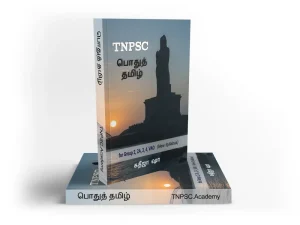
 TNPSC பொதுத் தமிழ் Book - for Group 2, 2A, 3, 4 & VAO
Original price was: ₹1,000.00.₹850.00Current price is: ₹850.00.
-
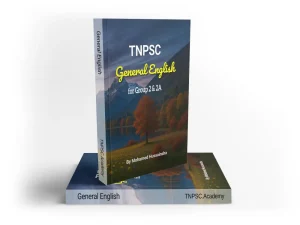
TNPSC General English Book - for Group 2 & 2A
Original price was: ₹1,000.00.₹850.00Current price is: ₹850.00.
Group 1 Courses

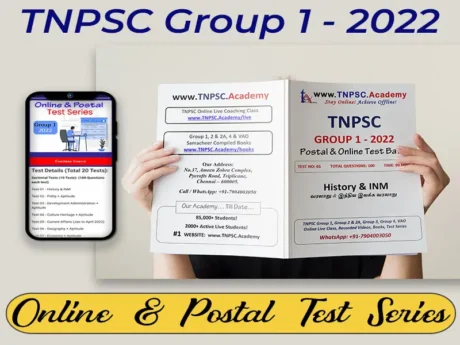
Group 1 | Postal and Online Test Series | 2022
Original price was: ₹3,200.00.₹2,800.00Current price is: ₹2,800.00. 88Class Tests
PRIVATE 67
TNPSC Group 1 - Test Series - 2019
Original price was: ₹3,500.00.₹2,800.00Current price is: ₹2,800.00. 542




Group 2 & 2A Courses
TNPSC Group 2 and 2A MAINS - 2022
PRIVATE 344TNPSC Group 2 and 2A - Test Series - 2019
Original price was: ₹2,400.00.₹1,800.00Current price is: ₹1,800.00. 527Class Tests
PRIVATE 67TNPSC Group 2 and 2A - Test Series - 2019 - தமிழ்
Original price was: ₹2,400.00.₹1,800.00Current price is: ₹1,800.00. 175





www.tnpsc.academy – TNPSC Current Affairs August 01, 2020 (01/08/2020)
Download as PDF
Topic: Latest Diary of Events
Muslim Women Rights Day
Recently, 1st August has been recorded as “Muslim Women Rights Day” in the country’s history to mark first anniversary of the passage of Muslim Women (Protection of Rights on Marriage) Act, 2019.
The law made triple talaq a criminal offence. It was on this day last year that the bill got the Presidential nod.
_
Topic: Welfare Oriented Govt Schemes and their Utilities
Gramodyog Vikas Yojana (Village industry development plan)
Ministry of Micro Small and Medium Enterprises (MSME) has approved a programme for the benefit of artisans involved in manufacturing of Agarbatti under the ‘Gramodyog Vikas Yojana’ (As a pilot project).
Key Facts:
Initially four Pilot Projects will be started, including one in North Eastern part of the country.
Each targeted cluster of artisans will be supported with about 50 Automatic Agarbatti making machines and 10 Mixing machines.
Khadi and Village Industries Commission (KVIC) will provide training, and assist artisans working in this area.
Significance:
The programme aims to enhance the production of ‘Agarbatti’ in the country and create sustainable employment for the traditional Artisans, by providing them regular employment and increase in their wages.
This will give a boost to the domestic Agarbatti Industry in the country and will reduce imports of Agarbatti.
_
Topic: Profile of States, Terms in News
Smog towers
A smog tower is a structure designed to work as a large-scale air purifier.
How it works?
This structure fitted with multiple layers of filters which trap fine dust particles suspended in the air as it passes through them.
Air is drawn through fans installed at the top of the tower, passed through filters, and then released near the ground.
Why in News?
Supreme Court, last year, had directed authorities to take measures, including asking the Delhi government and the Central Pollution Control Board (CPCB) to submit a comprehensive plan on setting up “smog towers” in the capital.
Later, in January, the Court directed that two towers should be installed in the capital by April on a pilot project basis.
Are they helpful?
Yes, smog towers have been experimented with in recent years in cities in the Netherlands, China, South Korea and Poland. The first such tower was erected in 2015, in Rotterdam, Netherlands (it can filter 30,000 cubic metres of air per hour around it).
Experts have said that the towers would create “clean air zones” in the city. A tower would reduce 50% of the particulate matter load — fine dust particles suspended in the air — in an area of 1 kilometre in the direction of the wind, as well as 200 metres each along the sides of the tower and against the direction of the wind.
Why Delhi needs such measures?
Air pollution in the national capital has been an issue of concern for quite some time as Delhi and its suburbs have ranked among the most polluted cities in the world frequently since 2014, when the World Health Organisation (WHO) declared Delhi the most polluted city in the world.
Pollution levels in Delhi increase dramatically during winter — on some days to nearly 10 times above the limits prescribed by WHO, posing a serious risk to vulnerable and also healthy populations.
_
Topic: Profile of States
Mahatma Gandhi Setu
Why in News?
Western flank of Mahatma Gandhi setu reopens for traffic.
It is a bridge over the river Ganges in Bihar, India, connecting Patna in the south to Hajipur in the north. Its length is 5,750 metres and it is the third-longest river bridge in India.
_
Topic: International Events
Investment to Reduce Plastic Waste in India
A Singapore-based-NGO namely ‘Alliance to End Plastic Waste’ plans to invest between USD 70 million to 100 million in India over the next five years to reduce plastic waste.
Overall, the Alliance has a USD 500 million budget for environmental projects including the USD 100 million for India. The rest is for South East Asia and China.
Alliance to End Plastic Waste:
Alliance to End Plastic Waste was founded in 2019 as a nonprofit organisation to help solve this serious and complex issue – 8 million tons of plastic waste entering the ocean every year.
Nearly fifty companies across the plastics value chain have joined the Alliance and together they have committed to invest USD 1.5 billion towards solutions that will prevent the leakage as well as recover and create value from plastic waste.
World Nature Conservation Day:
The investment to end plastic waste in India was announced on the World Nature Conservation Day (28th July).
It is celebrated every year to create and increase awareness about the importance of natural resources.
The day also encourages people to save and protect Earth’s natural resources that are fast-depleting owing to over-exploitation and even misuse.
Ongoing Initiatives in India:
Currently, ‘Alliance to End Plastic Waste’ is working on the Project Aviral which aims to reduce plastic waste in the Ganga river.
Aviral seeks to pilot an approach to address waste management challenges. In particular, it will focus on strengthening an integrated plastic waste management system.
_
Topic: India and its Foreign Policies
1947 Tripartite Agreement on Gurkha soldiers
Recently, the Nepal’s Foreign Minister has said that the 1947 Tripartite Agreement between India, Nepal and the United Kingdom (that deals with the military service of Gurkha soldiers from Nepal) has become redundant.
He also said that Nepal would prefer to handle the matter bilaterally with India and the United Kingdom.
The Tripartite Agreement:
In 1947, when India became independent, it was decided to split Gurkha regiments between the British and Indian armies.
From the first quarter of the 19th century, Gurkhas had served under the British, first in the armies of the East India Company, and then the British Indian Army.
East India Company first recruited Gurkhas after suffering heavy casualties during the Anglo-Nepalese War also known as the Gurkha War. The war ended with the signing of the Treaty of Sugauli in 1816.
It ensured that Gurkhas in British and Indian service would enjoy broadly the same conditions of service as that of British and Indian citizens.
The services include all perks, remuneration, facilities and pension schemes etc.
Gorkha recruitment was the first window that was opened to Nepali youth to go abroad.
Key facts:
India has strong cultural ties with Nepal. Both countries share open borders and recognize the citizens of each other country as a national citizen. However, the bilateral relations which have soured in the recent past over border disputes, need to be strengthened through diplomatic relations.
_
Topic: India and its Foreign Policies
Operation Breathing Space: India-Israel
Recently, an Israeli team arrived in India with a multi-pronged mission, codenamed Operation Breathing Space to work with Indian authorities on the Covid-19 response.
Development of Test Kits:
India’s Defence Research and Development Organisation (DRDO) and Israel’s defence ministry research and development team are working together to develop four different kinds of rapid testing kit for Covid-19 which can give the result within 30 seconds.
Types of Tests:
The tests include an audio test, a breath test, thermal testing, and a polyamino test which,
In the audio test, a patient’s voice would be recorded and evaluated through artificial intelligence and machine learning.
In the breath test the patient will blow into a tube that will detect the virus using terra-hertz (high frequency) waves.
Thermal testing will enable identification of the virus in a saliva sample.
Polyamino acids test seeks to isolate proteins related to Covid-19.