
TNPSC Books
-
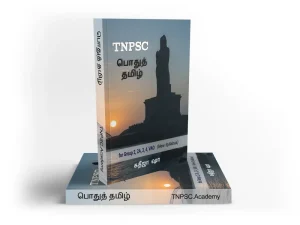
 TNPSC பொதுத் தமிழ் Book - for Group 2, 2A, 3, 4 & VAO
Original price was: ₹1,000.00.₹850.00Current price is: ₹850.00.
-
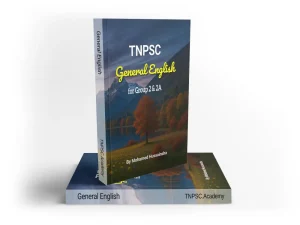
TNPSC General English Book - for Group 2 & 2A
Original price was: ₹1,000.00.₹850.00Current price is: ₹850.00.
Group 1 Courses

TNPSC Group 1 - Test Series - 2019
Original price was: ₹3,500.00.₹2,800.00Current price is: ₹2,800.00. 542
Class Tests
PRIVATE 67Group 1 | Postal and Online Test Series | 2022
Original price was: ₹3,200.00.₹2,800.00Current price is: ₹2,800.00. 88






Group 2 & 2A Courses
TNPSC Group 2 and 2A - Test Series - 2019
Original price was: ₹2,400.00.₹1,800.00Current price is: ₹1,800.00. 527TNPSC Group 2 and 2A MAINS - 2022
PRIVATE 344TNPSC Group 2 and 2A - Test Series - 2019 - தமிழ்
Original price was: ₹2,400.00.₹1,800.00Current price is: ₹1,800.00. 175Class Tests
PRIVATE 67






www.tnpsc.academy – TNPSC Current Affairs January 06, 2020 (06/01/2020)
Download as PDF
Topic: Public Awareness and General Administration, Latest Diary of Events
Pradhan Mantri Fasal Bima Yojana (PMFBY)
Maharashtra has become the first state in the country to integrate its land records with the web portal of the Pradhan Mantri Fasal Bima Yojana (PMFBY).
This will help in checking the cases of “over-insurance” — insurance of more land than in possession — as well as insurance of ineligible people.
_
Topic: International Events, Places in News
Iran nuclear deal
Iran has completely withdrawn from JCPOA (Joint Comprehensive Plan of Action) nuclear deal. The announcement came after the US troops killed General Qassem Soleimani.
What was the iran nuclear deal?
Iran agreed to rein in its nuclear programme in a 2015 deal struck with the US, UK, Russia, China, France and Germany.
Under the Joint Comprehensive Plan of Action (JCPoA)Tehran agreed to significantly cut its stores of centrifuges, enriched uranium and heavy-water, all key components for nuclear weapons.
The JCPOA established the Joint Commission, with the negotiating parties all represented, to monitor implementation of the agreement.
Why did Iran agree to the deal?
It had been hit with devastating economic sanctions by the United Nations, United States and the European Union that are estimated to have cost it tens of billions of pounds a year in lost oil export revenues. Billions in overseas assets had also been frozen.
_
Topic: World Organizations, Latest Reports and Summits
Asia Pacific Drosophila Research Conference
The fifth edition of the Asia Pacific Drosophila Research Conference (APDRC5) is being held at Pune.
The conference is being organised in the country for the first time by the Indian Institute of Science Education and Research (IISER).
About APDRC:
The Asia Pacific Drosophila Research Conferences (APDRC) are biennial events that aim to promote the interaction of Drosophila Researchers in the Asia-Pacific region with their peers in the rest of the world.
What is Drosophila?
It is a genus of flies, belonging to the family Drosophilidae, whose members are often called “small fruit flies” or (less frequently) pomace flies, vinegar flies, or wine flies, a reference to the characteristic of many species to linger around overripe or rotting fruit.
It is one of the most widely-used and preferred model organisms in biological research across the world for the last 100 years. Several discoveries in biology have been made using this.
Its genome is entirely sequenced and there is enormous information available about its biochemistry, physiology and behaviour.
_
Topic: Awareness in Space, New Inventions on Science and Health
Project NETRA
Indian Space Research Organisation has inked a pact with Indian Institute of Astrophysics (IIA) to pave the way for collaboration in establishing optical telescope facilities under Project ‘NETRA’ for tracking space objects.
What is Project NETRA (Network for space object Tracking and Analysis)?
Under the project, the ISRO plans to put up many observational facilities: connected radars, telescopes; data processing units and a control centre. They can, among others, spot, track and catalogue objects as small as 10 cm, up to a range of 3,400 km and equal to a space orbit of around 2,000 km.
_
Topic: Profile of States, Latest Diary of Events
Kerala to turn to Miyawaki method
The Miyawaki method of afforestation is to come up on the government office premises, residential complexes, school premises, and puramboke land in Kerala.
What is Miyawaki method?
The Miyawaki method, developed by a Japanese botanist after whom it is named, involves planting saplings in small areas, causing them to “fight” for resources and grow nearly 10 times quicker.
It originated in Japan, and is now increasingly adopted in other parts of the world, including our Chennai. It has revolutionised the concept of urban afforestation by turning backyards into mini-forests.
_
Topic: Discovery of New Species, Latest diary of Events
Chinese paddlefish found in the Yangtze – declared extinct
It is native to the Yangtze, Asia’s longest river. It is one of the world’s largest species of freshwater species. It has been declared extinct by Chinese scientists. The last confirmed sighting of the fish was in 2003.
It is thought to have become functionally extinct — which means there are no breeding pairs left — in 1993.
Two other notable Yangtze species — reeves shad, a type of fish and the baiji, or Yangtze River dolphin — were declared ‘functionally extinct’ in 2015 and 2006 respectively.
_
Topic: Places in News
Bhitarkanika census on saltwater crocodiles
Bhitarkanika census finds an increase of 15 saltwater crocodiles from last year. There are now 1,757 crocodiles in the park, the census conducted on January 3, 2020, found. Last year, there were 1,742.
There are three species of crocodilians—saltwater, Mugger and Gharial.
Mugger: The mugger crocodile, also called the Indian crocodile, or marsh crocodile, is found throughout the Indian subcontinent. It is listed as vulnerable by IUCN. The mugger is mainly a freshwater species, and found in lakes, rivers and marshes.
Gharial: The Gharial or fish eating crocodile is native to the Indian subcontinent. It is listed as a Critically Endangered by IUCN.
Saltwater Crocodile: It is the largest of all living reptiles. It listed as least concern by IUCN. It is found throughout the east coast of India.
_
Topic: Profile of States, Latest Diary of Events
Smog tower
Delhi gets its first smog tower. In November, the Supreme Court had directed the Centre and the Delhi government to prepare a plan to install ‘smog towers’ across the capital to deal with air pollution.
What is a ‘smog tower’?
Smog towers are structures designed to work as large-scale air purifiers. They are usually fitted with multiple layers of air filters, which clean the air of pollutants as it passes through them. After the cleaning, the tower releases clean air.
The filters installed in the tower will use carbon nanofibres as a major component and will be fitted along its peripheries. The tower will focus on reducing particulate matter load.
_
Topic: Places in News, Latest Diary of Events
Bibi Ka Maqbara
It is a tomb located in Aurangabad, Maharashtra. It was commissioned in 1660 by the Mughal emperor Aurangzeb in the memory of his first and chief wife Dilras Banu Begum.
It is considered to be a symbol of Aurangzeb’s ‘conjugal fidelity’. The structure, known as the ‘Taj of the Deccan’ because of its striking resemblance to the Taj Mahal.
_
Topic: General Administration, Latest Diary of Events
Turtle Rehab Centre in Bihar-First of its kind
A turtle rehabilitation Centre is to be set up in Bihar’s Bhagalpur forest. The centre will shelter more than 500 turtles and is to be spread over half a hectare.
The rehab centre will act as home to sick and severely injured turtles that are being rescued from smugglers.
Prior to the rehab, the forest officials were not able to monitor the rescued turtles before releasing them into rivers. The rehab centre will help in solving this problem.
_
Topic: Latest Reports and Summits, Latest Diary of Events
ICMR releases report on Sugar Intake of India, Report first of its kind
The Indian Council of Medical Research (ICMR) released its report on sugar intake of India. The intake was measured in grams per day.
The report was released based on a joint survey conducted by ICMR, NIN (National Institute of Nutrition), Hyderabad and ILSI (International Life Science Institute of India). The study is the first of its kind in the country.
Key features:
The study says that intake of added sugar in metro cities was 19.5 grams per day. This is lower than the level recommended by ICMR which is 30 gram per day. Though the levels of all the cities were within the threshold, they were so close to the upper limit in certain cities.
According to the study, sugar intake was the highest in Mumbai. Mumbai reported 26.3 g/day followed by Ahmedabad at 25.9 g/day.
The other counter parts of the metropolitan cities that have high intakes include Delhi (23.2 g/day), Bengaluru at 19.3 g/day, Kolkata at 17.1 g/day and Chennai at 16.1 grams per day.