
TNPSC Books
-
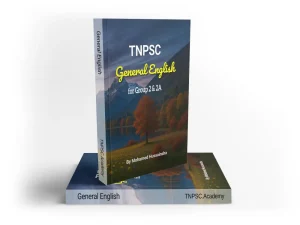
 TNPSC General English Book - for Group 2 & 2A
Original price was: ₹1,000.00.₹850.00Current price is: ₹850.00.
-
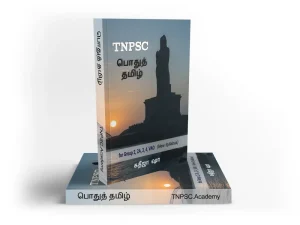
TNPSC பொதுத் தமிழ் Book - for Group 2, 2A, 3, 4 & VAO
Original price was: ₹1,000.00.₹850.00Current price is: ₹850.00.
Group 1 Courses

TNPSC Group 1 - Test Series - 2019
Original price was: ₹3,500.00.₹2,800.00Current price is: ₹2,800.00. 542
Group 1 | Postal and Online Test Series | 2022
Original price was: ₹3,200.00.₹2,800.00Current price is: ₹2,800.00. 88Class Tests
PRIVATE 67






Group 2 & 2A Courses
TNPSC Group 2 and 2A - Test Series - 2019
Original price was: ₹2,400.00.₹1,800.00Current price is: ₹1,800.00. 527TNPSC Group 2 and 2A - Test Series - 2019 - தமிழ்
Original price was: ₹2,400.00.₹1,800.00Current price is: ₹1,800.00. 175TNPSC Group 2 and 2A MAINS - 2022
PRIVATE 344Class Tests
PRIVATE 67





www.tnpsc.academy – TNPSC Current Affairs July 10, 2020 (10/07/2020)
Download as PDF
Topic: Historical Diary of Events, Profile of States
Mongolian Kanjur Manuscripts
The Ministry of Culture had taken up the project of reprinting of 108 volumes of Mongolian Kanjur under the National Mission for Manuscripts (NMM). Now, the first set of five volumes of Mongolian Kanjur have been released.
What is Mongolian Kanjur?
In the Mongolian language ‘Kanjur’ means ‘Concise Orders’– the words of Lord Buddha in particular.
It is held in high esteem by Mongolian Buddhists and they worship the Kanjur at temples and recite the lines of Kanjur in daily life as a sacred ritual.
The Mongolian Kanjur has been translated from Tibetan. The language of the Kanjur is Classical Mongolian.
Historical connection between India and Mongolia:
Historical interaction between India and Mongolia goes back centuries. Buddhism was carried to Mongolia by Indian cultural and religious ambassadors during the early Christian era.
As a result, today, Buddhists form the single largest religious denomination in Mongolia. India established formal diplomatic relations with Mongolia in 1955.
Background:
India possesses an estimate of ten million manuscripts, probably the largest collection in the world. These cover a variety of themes, textures and aesthetics, scripts, languages, calligraphies, illuminations and illustrations.
_
Topic: International Events
U.S. withdrawal from WHO
On July 6, when the number of novel coronavirus cases and deaths in the U.S. reached over 2.8 million and nearly 0.13 million, respectively, the U.S. officially notified the United Nations of its intention to withdraw membership from the World Health Organization.
This comes after President Donald Trump announced on May 29 his decision to halt fundingand pull out of the global health body.
Why this decision?
Trump said the body had “called it wrong” on COVID-19 and that it was very “China centric” in its approach, suggesting that the WHO had gone along with Beijing’s efforts months ago to under-represent the severity of the outbreak.
Implications:
The capricious decision to withdraw from WHO will have dire consequences for global public health.
The departure of the U.S. will be a significant blow to the WHO in terms of loss of technical expertise and an annual funding of about $450 million.
The WHO now will have to suspend the country’s voting rights and deny access to its services, as per Article 7 of its Constitution.
About WHO:
WHO came into existence on 7 April, 1948 – a date which is now celebrated every year as World Health Day. The organisation has more than 7,000 people working in 150 country offices, six regional offices and at its headquarters in Geneva, Switzerland.
_
Topic: India and its Foreign Policies, Latest Diary of Events
Australia and the Malabar Exercise
India to shortly take a call on Australia’s inclusion in Malabar.
Why Australia should be included in the group?
Australia’s inclusion would be seen as a possible first step towards the militarization of the Quad coalition, something Beijing has opposed in the past.
Besides, even Japan and the U.S. have been keen on Canberra’s inclusion for sometime now and have been pushing India to consider it.
Procedure to be followed:
Once the government takes a decision to include Australia, as per procedure, the other partner nations — Japan and the U.S. — have to be informed to secure their consent, after which a formal invitation would be extended to Australia.
About Malabar exercise:
Malabar began as a bilateral naval exercise between India and the U.S. in 1992, and was expanded into a trilateral format with the inclusion of Japan in 2015. It has been delayed this year due to the COVID-19 pandemic.
What is Quad grouping?
The quadrilateral formation includes Japan, India, United States and Australia.
All four nations find a common ground of being the democratic nations and common interests of unhindered maritime trade and security.
The idea was first mooted by Japanese Prime Minister Shinzo Abe in 2007. However, the idea couldn’t move ahead with Australia pulling out of it.
Significance of the grouping:
Quad is an opportunity for like-minded countries to share notes and collaborate on projects of mutual interest.
Members share a vision of an open and free Indo-Pacific.
It is one of the many avenues for interaction among India, Australia, Japan and the US and should not be seen in an exclusive context.
_
Topic: Latest inventions in Science and Technology, Profile of States
Rewa solar project, MP
Inaugurated recently by Prime Minister Narendra Modi, it is Asia’s largest 750 MW solar power project located at Rewa in Madhya Pradesh.
The Solar Park was developed by the Rewa Ultra Mega Solar Limited (RUMSL), a Joint Venture Company of Madhya Pradesh Urja Vikas Nigam Limited (MPUVN), and Solar Energy Corporation of India (SECI), a Central Public Sector Undertaking.
Significance:
The Rewa Project has been acknowledged in India and abroad for its robust project structuring and innovations.
Its payment security mechanism for reducing risks to power developers has been recommended as a model to other States by MNRE.
It has also received World Bank Group President’s Award for innovation and excellence and was included in the book “A Book of Innovation: New Beginnings” released by Prime Minister.
–
Topic: Places in News
Bhashan Char island
It is also known as Char Piya. It is an island in Bangladesh. It is located in the Bay of Bengal. The island was formed with Himalayan silt in 2006. It spans 40 km².
Why in News?
Rohingya refugees on this island will not be allowed to leave unless they agree to return home, Bangladesh authorities said recently.