
TNPSC Books
-
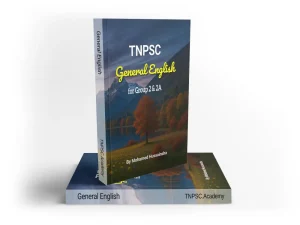
 TNPSC General English Book - for Group 2 & 2A
Original price was: ₹1,000.00.₹850.00Current price is: ₹850.00.
-
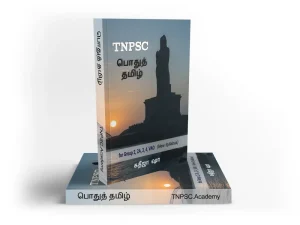
TNPSC பொதுத் தமிழ் Book - for Group 2, 2A, 3, 4 & VAO
Original price was: ₹1,000.00.₹850.00Current price is: ₹850.00.
Group 1 Courses

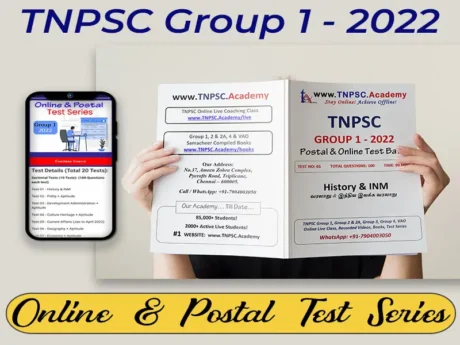
Group 1 | Postal and Online Test Series | 2022
Original price was: ₹3,200.00.₹2,800.00Current price is: ₹2,800.00. 88Class Tests
PRIVATE 67
TNPSC Group 1 - Test Series - 2019
Original price was: ₹3,500.00.₹2,800.00Current price is: ₹2,800.00. 542




Group 2 & 2A Courses
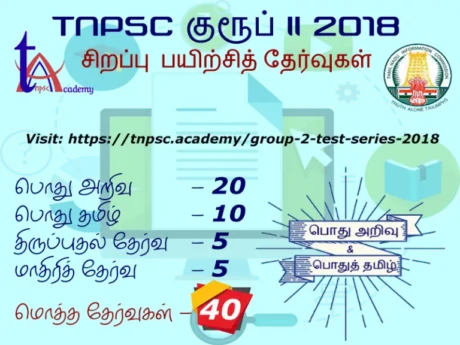
TNPSC Group 2 and 2A - Test Series - 2019
Original price was: ₹2,400.00.₹1,800.00Current price is: ₹1,800.00. 527TNPSC Group 2 and 2A - Test Series - 2019 - தமிழ்
Original price was: ₹2,400.00.₹1,800.00Current price is: ₹1,800.00. 175TNPSC Group 2 and 2A MAINS - 2022
PRIVATE 344Class Tests
PRIVATE 67




www.tnpsc.academy – TNPSC Current Affairs July 15, 2020 (15/07/2020)
Download as PDF
Topic: Places in news
World’s longest subsea power cable
Why in News?
Construction work has begun in Lincolnshire on the world’s longest subsea power cable (767km), which will run between Britain and Denmark to share renewable energy between the two countries.
By 2023, the high-voltage, direct-current link will transmit the equivalent of enough electricity to power 1.5m British homes.
_
Topic: Latest inventions in Science and Technology
Hope: UAE Mars Mission
The United Arab Emirates (UAE) Mars Mission or ‘Hope’ is scheduled for launch on 16th July, 2020.
It is one of three missions launching to Mars this month. The USA and China, both have surface rovers in the late stages of preparation.
Key facts:
Hope Mission is the first interplanetary mission for the Arab World.
The ‘Hope Orbiter’ will be lifted on an H-IIA rocket from Mitsubishi Heavy Industries, a machinery maker in Japan. It will be launched from Tanegashima Island in Japan.
The UAE does not have its own rocket industry.
Once launched, it is expected to arrive in orbit around Mars in February 2021 (the year of 50th anniversary of UAE’s founding).
It costs about USD 200 million and will carry three instruments: an infrared spectrometer, an ultraviolet spectrometer and a camera.
Expected Benefits:
It will give planetary scientists their first global view of Martian weather at all times of day.
Over its two-year mission, it will investigate how dust storms and other weather phenomena near the Martian surface speed or slow the loss of the planet’s atmosphere into space.
Significance: The country’s primary aim is to inspire school children and spur its science and technology industries, which, in turn, will enable the Emirates to tackle critical issues like food, water, energy and a post-petroleum economy.
Other Two Missions on Mars:
NASA’s Mars rover, Perseverance, with instruments to search for chemical signs of past life, is scheduled to launch on 30th July, 2020.
China is also launching an ambitious mission to Mars, Tianwen-1.
_
Topic: Latest inventions on Science and Technology
Low-cost Supercapacitor – India
Recently, scientists at the International Advanced Research Centre for Powder Metallurgy and New Materials (ARCI) have developed a simple, low-cost, environment-friendly, and sustainable supercapacitor device. ARCI is an autonomous organization of the Department of Science and Technology, Government of India.
Supercapacitor:
Supercapacitor is a next-generation energy storage device. They are also known as ultracapacitors.
It has significant advantages such as high power density, long durability, and ultrafast charging characteristics as compared to conventional capacitors and Lithium-Ion batteries (LIB).
Main components of supercapacitors include electrode, electrolyte, separator, and the current collector.
The electrode and electrolyte are the pivotal components, which directly determine the electrochemical behaviour of the supercapacitors.
The manufacturing cost of electrode materials, as well as electrolytes account for a major portion of the supercapacitor manufacturing cost.
An electrode is a solid electric conductor that is used to take an electric current to or from a source of power.
An electrolyte is a substance that produces an electrically conducting solution when dissolved in a polar solvent, such as water.
Key facts:
The supercapacitor is developed from industrial waste cotton based electrode & natural seawater electrolyte.
Industrial waste cotton was converted into highly porous carbon fibers by activation process and then utilised to make high-performance supercapacitor electrodes.
Natural seawater was explored as an environment-friendly, cost-effective and alternative aqueous electrolyte.
The development is an excellent example of creative science for the sustainable, green processes embedding principles of waste-to-wealth.
_
Topic: Current Socio-Economic Issues
Spike-LR Anti-Tank Guided Missiles
The India Army is set to place a repeat order for Spike-LR (Long Range) Anti-Tank Guided Missiles (ATGM) from Israel as part of emergency procurement.
The decision comes in the backdrop of continuing tensions on the Line of Actual Control (LAC) with China.
Key facts:
Last year, the Army procured 12 launchers and around 250 missiles from Israel under the new emergency financial powers sanctioned by the Defence Ministry after the Balakot airstrike.
Emergency Financial Powers:
Under these, armed forces have been given a free hand to procure equipment worth up to Rs. 300 crore on a priority basis with deliveries stipulated to be completed in three months but extendable up to six months.
Entirely new systems not in use were also allowed to be procured under the new powers.
Spike-LR:
These are the 4th generation Anti-Tank Missiles developed and manufactured by the Rafael Advanced Defence Systems, Israel.
It is a portable anti-armour weapon system with a range of up to 4 km, which can be operated in fire-and-forget mode and in the fire, observe and update mode using the fibre-optic data link.
These are used by infantry soldiers, special rapid reaction forces, ground forces and helicopter aircrew.
It can work in non-line-of-sight (NLOS) mode allowing the gunner to operate from a covered position.
The army recently decided to place a repeat order for 72,400 Sig 716 assault rifles from the USA as well.
They will replace the existing Indian Small Arms System (Insas) rifles manufactured locally by the Ordnance Factories Board.
_
Topic: Places in News
Decrease in Dolphin Number: Chambal River
According to the latest census report prepared by the Madhya Pradesh forest department, the number of dolphins in Chambal river has been reduced by 13% in 4 years.
There are just 68 dolphins left in the 435-kilometre-long Chambal river sanctuary which passes through three states i.e. Madhya Pradesh, Uttar Pradesh and Rajasthan. Gangetic Dolphins are the sanctuary’s main attraction.
The decreasing trend is continuing from 2016 when there were 78 dolphins.
Key Facts:
The maximum carrying capacity of dolphins in Chambal is 125.
The carrying capacity of an environment is the maximum population size of a biological species that can be sustained in that specific environment, given the food, habitat, water, and other resources available.
The dolphins were spotted for the first time in 1985 in Chambal river (a tributary of Yamuna) near Etawah, Uttar Pradesh. That time, the number was more than 110.
Gangetic Dolphin:
Threats: Habitat destruction, Poaching, Pollution
Protection Status: International Union for Conservation of Nature (IUCN): Endangered
Topic: Latest Diary of Events
World Youth Skills Day
15th July is marked as World Youth Skills Day. It was designated by the United Nations General Assembly (UNGA) in 2014.
Aim: To achieve better socio-economic conditions for today’s youth in terms of challenges of unemployment and under-employment.
_
Topic: Political System in India
Padmanabhaswamy temple case
Reversing the 2011 Kerala High Court decision, the Supreme Court has upheld the right of the Travancore royal family to manage the property of deity at Sree Padmanabha Swamy Temple in Thiruvananthapuram.
The Temple has been in the news since 2011 after the discovery of treasure worth over Rs. 1 lakh crore in its underground vaults.
What was the case?
The central legal question was whether Utradam Thirunal Marthanda Varma, the younger brother of Chithira Thirunal Balarama Varma, the last Ruler of Travancore, could claim to be the “Ruler of Travancore” after the death of the ruler in 1991.
The court examined this claim within the limited meaning of that term according to the Travancore-Cochin Hindu Religious Institutions Act, 1950 to claim ownership, control and management of the ancient Sree Padmanabha Swamy Temple.
The judgment:
The Supreme Court (SC) has reversed the 2011 Kerala High Court decision, which had directed the Kerala government to set up a trust to control the management and assets of the temple.
The court said that, as per customary law, the shebait rights (right to manage the financial affairs of the deity) survive with the members of the family even after the death of the last ruler.
The court defined ‘shebait’ as the “custodian of the idol, its earthly spokesman, its authorised representative entitled to deal with all its temporal affairs and to manage its property”.
Directions:
Accepting the royals’ submission that the temple is a “public temple”, the court issued a slew of directions for its transparent administration in the future.
It directed the setting up of an administrative committee with the Thiruvananthapuram District Judge as its chairperson.
The other members would be a nominee of the trustee (royal family), the chief thanthri of the temple, a nominee of the State and a member nominated by the Union Ministry of Culture. This committee would take care of the daily administration of the temple.
It also ordered a second committee to be constituted to advise the administrative committee on policy matters.
This would be chaired by a retired High Court judge nominated by the Chief Justice of the Kerala High Court.
Who had the ownership, control and management of the Padmanabhaswamy temple before 1991? (Have a brief overview of the events):
All the temples which were under the control and management of the erstwhile Princely States of Travancore and Cochin were under the control of the Travancore and Cochin Devaswom Boards before 1947.
However, as per the Instrument of Accession signed between the princely states and the Government of India, since 1949, the administration of the Padmanabhaswamy Temple was “vested in trust” in the Ruler of Travancore.
The state of Kerala was carved out in 1956 but the temple continued to be managed by the erstwhile royals.
In 1971, privy purses to the former royals were abolished through a constitutional amendment stripping their entitlements and privileges.
In 1991, when the last ruler’s brother took over the temple management, it created a furore among devotees who moved the courts leading to a long-drawn legal battle. The government joined in; supporting the claims of the petitioner that Marthanda Varma had no legal right to claim the control or management of the temple.
Why Article 366 is in News?
The High Court (HC) had ruled that the successor to the erstwhile royals could not claim to be in control of the Sree Padmanabhaswamy Temple after the amendment of definition of ‘Ruler’ in Article 366 (22) of the Constitution of India.
The definition of Ruler was amended by the Twenty Sixth (Constitutional) Amendment Act, 1971, which abolished the privy purses.
Article 366 (22) reads, “Ruler” means the Prince, Chief or other person who, at any time before the commencement of the Twenty Sixth (Constitutional) Amendment Act, 1971, was recognised as the Ruler of an Indian State or was recognised as the successor of such Ruler.