
TNPSC Books
-
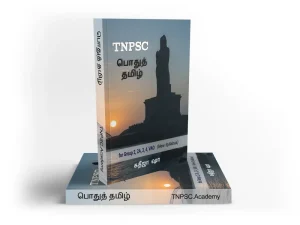 TNPSC பொதுத் தமிழ் Book - for Group 2, 2A, 3, 4 & VAO
Original price was: ₹1,000.00.₹850.00Current price is: ₹850.00.
-
 TNPSC General English Book - for Group 2 & 2A
Original price was: ₹1,000.00.₹850.00Current price is: ₹850.00.
Group 1 Courses

Group 1 | Postal and Online Test Series | 2022
Original price was: ₹3,200.00.₹2,800.00Current price is: ₹2,800.00. 88
Class Tests
PRIVATE 67
TNPSC Group 1 - Test Series - 2019
Original price was: ₹3,500.00.₹2,800.00Current price is: ₹2,800.00. 542


Group 2 & 2A Courses

TNPSC Group 2 and 2A - Test Series - 2019
Original price was: ₹2,400.00.₹1,800.00Current price is: ₹1,800.00. 527
TNPSC Group 2 and 2A - Test Series - 2019 - தமிழ்
Original price was: ₹2,400.00.₹1,800.00Current price is: ₹1,800.00. 175Class Tests
PRIVATE 67
TNPSC Group 2 and 2A MAINS - 2022
PRIVATE 344





www.tnpsc.academy – TNPSC Current Affairs July 18, 2020 (18/07/2020)
Download as PDF
Topic: Eminent Persons in News
Non Brahmin Priest
P Thiagarajan from Madurai became the state’s second non-brahmin priest in Tamilnadu.
He was appointed as a priest in Siddhi Vinayakar Temple in Nagamalai Pudukkottai. It comes under the Hindu Religious and Charitable Endowments (HR&CE) department.
T Marichamy from Madurai was appointed as Tamil Nadu’s first non-brahmin priest at the Ayyappan temple in Tallakulam in February 2018. The Madras Hindu Religious Endowment Act by the first Justice Party government in 1925 brought many Hindu temples under the direct control of the State government.
Background:
Later, in 1982, the then Chief Minister M.G. Ramachandran appointed Justice Maharajan commission to identify reform measures to be taken in temple practices.
The Karunanidhi-led DMK government issued a landmark Government Order (GO) allowing non-brahmins to become archakars in temples managed by the Department of Hindu Religious and Charitable Endowments (HR&CE), in the year 2006.
_
Topic: Latest Diary of Events
Educational Development Day
The birthday of late Chief Minister K Kamaraj on July 15 is celebrated as ‘Educational Development Day’ since 2007.
In 2006, the then Tamil Nadu Government passed an Act in this regard. A nutritious noon meal scheme was proposed to be introduced on that day. Under the scheme, eggs were to be provided to the students twice a week.
_
Topic: Latest Reports and Events
Global Multidimensional Poverty Index 2020
Recently, Global Multidimensional Poverty Index 2020 was released by the United Nations Development Programme (UNDP) and the Oxford Poverty & Human Development Initiative (OPHI).
The data of the index is based on the study of poverty trends in 75 countries.
Global Scenario:
1.3 billion people are still living in multidimensional poverty. More than 80% are deprived in at least five of the ten indicators used to measure health, education and living standards in the global MPI.
The burden of multidimensional poverty disproportionately falls on children – half of multidimensionally poor people are children under age 18.
65 out of 75 countries studied significantly reduced their multidimensional poverty levels between 2000 and 2019.
About 84.3% of multidimensionally poor people live in Sub-Saharan Africa and South Asia.
67% of multidimensionally poor people are in middle-income countries.
Indian Scenario:
India lifted as many as 270 million people out of multidimensional poverty between 2005-06 and 2015-16.
Neighbourhood Scenario: In China, 70 million people left multidimensional poverty between 2010 and 2014, while in Bangladesh, the numbers declined by 19 million between 2014 and 2019.
Impact of Covid-19: Covid-19 is having a profound impact on the development landscape.
The study finds that on average, poverty levels will be set back 3 to 10 years due to Covid-19.
Sustainable Development Goals: The index emphasises on measuring and monitoring progress under the goals to reach ‘zero poverty by 2030-Goal 1 of the SDGs’.
_
Topic: International Events
US’ Trinity Test
On 16th July, exactly 75 years ago, scientists tested Gadget — the world’s first atomic bomb — in what was dubbed as the ‘Trinity Test’.
Less than a month later, an identical nuclear bomb called ‘Fat Man’ was dropped on the Japanese city of Nagasaki, killing tens of thousands of people.
What you need to know?
The super bomb, nicknamed ‘Gadget’, was developed as part of the US-led Manhattan Project.
Manhattan Project sought to build nuclear weapons to give the allied forces an edge over Germany, Japan and Italy in World War 2.
What were the repercussions of the Trinity Test?
Residents of New Mexico were not warned about the test.
And the adverse impact of radiation caused by the detonation, was ignored for years after the test.
There was a sudden rise in infant mortality.
Several residents also complained that the number of cancer patients went up after the Trinity Test.
The dust outfall from the explosion was expected to have travelled nearly 100 miles from the test site, posing a serious threat to residents in the area.
Many families complained that their livestock suffered skin burns, bleeding and loss of hair.
It was only in 1990, when the federal government passed the Radiation Exposure Compensation Act (RECA), that residents of North Mexico who contracted Cancer and other illnesses due to radiation exposure received compensation.
How many countries worldwide now have nuclear weapons?
Seventy-five years after the Trinity Test, as many as nine countries around the world are currently in possession of nuclear weapons.
These include, the US, the UK, Russia, France, India, China, Israel, Pakistan and North Korea.
At least eight countries have detonated over 2,000 nuclear test explosions since 1945.
The most recent instance of nuclear bomb test explosions conducted by India, were the series of five explosions done as part of the Pokhran-II tests in May 1998. The first test, code-named Smiling Buddha, took place in May 1974.
_
Topic: Public Awareness and General Administration
India registers a steep decline in maternal mortality ratio
Special bulletin on Maternal Mortality in India 2016-18 was recently released by the Office of the Registrar General’s Sample Registration System (SRS).
What is MMR?
MMR is defined as the number of maternal deaths per 1,00,000 live births.
The target 3.1 of Sustainable Development Goals (SDG)set by the United Nations aims to reduce the global maternal mortality ratio to less than 70 per 1,00,000 live births.
What is Maternal Mortality?
Maternal mortality in a region is a measure of reproductive health of women in the area.
As per the World Health Organization, maternal death is the death of a woman while pregnant or within 42 days of termination of pregnancy, from any cause related to or aggravated by the pregnancy or its management.
Key facts:
MMR in India has declined to 113 in 2016-18 from 122 in 2015-17 and 130 in 2014-2016.
MMR of various States includes Assam (215), Bihar (149), Madhya Pradesh (173), Chhattisgarh (159), Odisha (150), Rajasthan (164), Uttar Pradesh (197) and Uttarakhand (99).
The southern States registered a lower MMR — Andhra Pradesh (65), Telangana (63), Karnataka (92), Kerala (43) and Tamil Nadu (60).
_
Topic: Latest inventions on Science and Technology
Eosinophil count
It is a blood test that measures the number of one type of white blood cells called eosinophils. Eosinophils become active when you have certain allergic diseases, infections, and other medical conditions.
Why in News?
Researchers have started this test for early recognition of Covid-19 in patients.
_
Topic: Latest Diary of Events
2021 International Year of Fruits and Vegetables
India co-hosted the official launch of 2021 International Year of Fruits and Vegetables. India and Chile joined the Food and Agriculture Organization (FAO) of the United Nations (UN). India is the 2nd largest producer of fruits and vegetables in the World.
_
Topic: Latest Diary of Events, Records
Soham Mukherjee – Guinness World Record With 101 Side-To-Side Hops
Dubai-based Indian teenager Soham Mukherjee won a Guinness World Records title by completed a total of 101 hops.
Belonging to New Delhi, Soham Mukherkee managed to break the previous title of 96 side-to-side hops in 30 seconds.
_
Topic: Profile of States, Latest Diary of Events
Assam’s Flood and Kaziranga’s Ecosystem
The recent flood in Assam has led to heavy casualties, displacement of peoples and animals and destruction of property and environment.
It has also led to inundation of 80% of the area of Kaziranga National Park.
Reason behind Floods:
Ill-maintained or poorly constructed river embankments are the main reason behind the flooding.
One major feature of flood management in Assam is total dependence on embankments.
Assam began constructing embankments in the 1960s and most of them have outlived their utility. Many of these started breaching or collapsing from the 1990s, more seriously from the 2000s.
Massive deforestation in catchment areas of rivers or release of waters by dams upstream.
Climate change is also a factor behind floods.
Floods in Kaziranga’s Ecosystem:
Experts believe that floods are necessary for Kaziranga by virtue of its riverine ecosystem. The system won’t survive without water.
Kaziranga National Park and Tiger Reserve (KNPTR) is sandwiched between the Brahmaputra river and the Karbi Anglong Hills. The entire area is formed by alluvial deposits from the Brahmaputra and its tributaries.
The regenerative nature of floods helps replenish Kaziranga’s water bodies and maintain its landscape, which is a mix of wetlands, grasslands and semi-evergreen deciduous forests.
The floodwaters function as a breeding ground for fish, which are carried away by the receding waters into the Brahmaputra. i.e the Kaziranga’s floods replenishes the Brahmaputra’s stock of fish.
The waters also help get rid of unwanted plants such as water hyacinth which collect in huge masses in the landscape.