
TNPSC Books
-
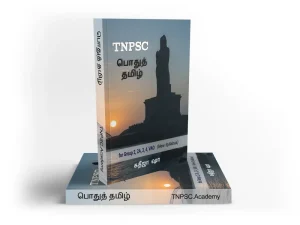
 TNPSC பொதுத் தமிழ் Book - for Group 2, 2A, 3, 4 & VAO
Original price was: ₹1,000.00.₹850.00Current price is: ₹850.00.
-
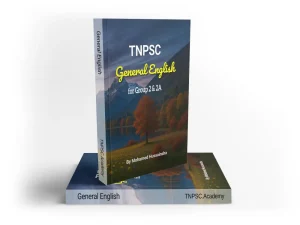
TNPSC General English Book - for Group 2 & 2A
Original price was: ₹1,000.00.₹850.00Current price is: ₹850.00.
Group 1 Courses

TNPSC Group 1 - Test Series - 2019
Original price was: ₹3,500.00.₹2,800.00Current price is: ₹2,800.00. 542
Group 1 | Postal and Online Test Series | 2022
Original price was: ₹3,200.00.₹2,800.00Current price is: ₹2,800.00. 88Class Tests
PRIVATE 67






Group 2 & 2A Courses
Class Tests
PRIVATE 67TNPSC Group 2 and 2A MAINS - 2022
PRIVATE 344TNPSC Group 2 and 2A - Test Series - 2019 - தமிழ்
Original price was: ₹2,400.00.₹1,800.00Current price is: ₹1,800.00. 175TNPSC Group 2 and 2A - Test Series - 2019
Original price was: ₹2,400.00.₹1,800.00Current price is: ₹1,800.00. 527






www.tnpsc.academy – TNPSC Current Affairs July 20, 2020 (20/07/2020)
Download as PDF
Topic: Geographical Landmarks, Latest findings
Unknown faults at the foot of the Himalaya
An oil and gas exploration company has helped geologists discover a series of faults at the foot of the Himalaya.
This fault system lies in the southeastern region of Nepal and has the potential to cause earthquakes in the densely populated country.
Significance of these findings:
This network of faults show that the Himalayan deformation reaches further [about 40 kilometres further south] than we previously thought.
It highlights the need to look below the surface, and to fully understand earthquakes and structures within the Himalaya.
Will this fault system affect India?
The newly discovered system doesn’t appear to extend into India, but seismic waves from an earthquake occurring on them might affect regions of India near the border.
However, other similar faults might be present elsewhere along the southern edge of the Himalaya and might extend beneath northern India.
_
Topic: Latest inventions on Science and Technology
Solar Orbiter
The European Space Agency has released the closest pictures ever taken of the Sun captured by the Solar Orbiter that was launched in February this year.
The spacecraft completed its first close pass of the Sun in mid-June, when it flew within 48 million miles of the Sun with 10 instruments turned on to snap the closest pictures of the giant star to date.
Observations made from these images:
There are mini-flares on the sun that the scientists are calling “camp fires”.
These camp fires are millionths of the size of the Sun’s massive flares that are routinely observed by Earth telescopes.
These small flares could have something to do with the heating process that makes the corona, the Sun’s outer atmosphere, far hotter than its surface.
What are Solar Flares?
It is a large explosion of magnetic energy in the Sun’s atmosphere which causes an intense burst of increased brightness.
Flares occur in active regions around sunspots.
During solar flares, the Sun releases bursts of energetic particles that enhance the solar wind that constantly emanates from the star into the surrounding space.
When these particles interact with Earth’s magnetosphere, they can cause magnetic storms that can disrupt telecommunication networks and power grids on the ground.
_
Topic: Awards
National Award for Excellence in Forestry
The National Award of Excellence for Outstanding Research in Forestry for the year 2019 has been awarded to Kannan C S Warrier, a scientist at Institute of Forest Genetics and Tree Breeding (IFGTB).
The award has been awarded to Kannan C S Warrier for releasing three salt-tolerant productive clones of Casuarina that are suitable for salt-affected soils, for the first time in the country.
This award is conferred by the Indian Council of Forestry Research and Education (ICFRE).
Key facts:
ICFRE is an apex body in the national forestry research system. ICFRE was recently declared as the Centre for Excellence in addressing issues related to land degradation by the Prime Minister.
India has 6.73 million hectares of salt affected land and is also the largest producer of Casuarina in the world which makes the production of these clones a significant achievement.
_
Topic: Latest Diary of Events
BlackRock Android Malware
Recently, a security firm has alerted about a new malware called BlackRock which targets social, communication, and dating apps.
BlackRock is a banking Trojan and said to be an enhanced version of existing Xerxes malware which itself is a variant of the LokiBot Android trojan.
Functioning: It collects user information by abusing the Accessibility Service of Android and overlaying a fake screen on top of a genuine app. It uses Android DPC (Device Policy Controller) to provide access to other permissions.
_
Topic: Discovery of Rare Species
Bathynomus raksasa (cockroach of the sea)
Recently, scientists have reported the discovery of the first super giant isopod species in the eastern Indian Ocean named ‘Bathynomus raksasa’. It has been described as the ‘cockroach of the sea’.
A team of researchers from Singapore discovered it while exploring waters of the Indian Ocean in Bantan, off the southern coast of West Java in Indonesia in 2018.
Key Facts:
Super Giant Isopod: The Bathynomus raksasa is a super giant isopod in the genus Bathynomus.
Isopods are marine invertebrates (animals without backbones) that belong to the greater crustacean group of animals, which also includes crabs and shrimp.
They live in many different types of habitat, from mountains and deserts to the deep sea.
Isopods that reach 50 cm are referred to as supergiants. The largest isopod species are from the genus Bathynomus.
_
Topic: Awards and Honours
2020 Von Karman Award
The International Academy of Astronautics (IAA) has announced the ISRO chief K Sivan as the recipient of the 2020 Von Karman Award. The award will be presented to Dr.K.Sivan in March 2021 at Paris.
About von Karman Award:
The International Academy of Astronautics (IAA) was also founded by Von Karman who was the first President of the organization which is committed to expanding the frontiers in space.
The Von Karman award was established in 1982 and is the premier award of the Academy.
It is given annually to recognize outstanding lifetime achievements in any branch of science without limit of nationality or gender.
The award honours the memory of the Academy’s founder and first President, a scientist of the highest international reputation.