
TNPSC Books
-
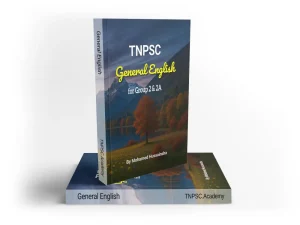
 TNPSC General English Book - for Group 2 & 2A
Original price was: ₹1,000.00.₹850.00Current price is: ₹850.00.
-
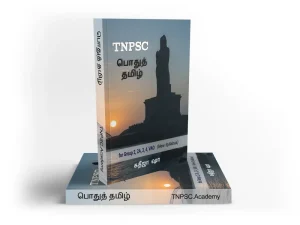
TNPSC பொதுத் தமிழ் Book - for Group 2, 2A, 3, 4 & VAO
Original price was: ₹1,000.00.₹850.00Current price is: ₹850.00.
Group 1 Courses

TNPSC Group 1 - Test Series - 2019
Original price was: ₹3,500.00.₹2,800.00Current price is: ₹2,800.00. 542
Group 1 | Postal and Online Test Series | 2022
Original price was: ₹3,200.00.₹2,800.00Current price is: ₹2,800.00. 88Class Tests
PRIVATE 67




Group 2 & 2A Courses
Class Tests
PRIVATE 67TNPSC Group 2 and 2A MAINS - 2022
PRIVATE 344TNPSC Group 2 and 2A - Test Series - 2019
Original price was: ₹2,400.00.₹1,800.00Current price is: ₹1,800.00. 527TNPSC Group 2 and 2A - Test Series - 2019 - தமிழ்
Original price was: ₹2,400.00.₹1,800.00Current price is: ₹1,800.00. 175






www.tnpsc.academy – TNPSC Current Affairs October 15, 2020 (15/10/2020)
Download as PDF in English
Topic: India and its Foreign Relations
Third Assembly of ISA
Recently, India and France have been re-elected as the President and Co-President of the International Solar Alliance (ISA) for a term of two years at the virtual third Assembly of ISA. The first two assemblies were held in India in 2018 and 2019.
The Assembly approved institutionalizing ISA’s engagement with the private and public corporate sector through the Coalition for Sustainable Climate Action (CSCA).
For the first time, Various solar awards were conferred on countries as well as institutions.
The Visvesvaraya award recognises the countries with a maximum floating solar capacity in each of the four regions of ISA, which are:
Asia Pacific Region.
Africa Region.
Europe and others Region.
Latin America and Caribbean Region.
The awards went to Japan for the Asia Pacific region and the Netherlands for Europe and other regions.
The Kalpana Chawla award for outstanding contribution of scientists and engineers working in the field of solar energy.
The inaugural award in this category was conferred to Dr. Bhim Singh from IIT Delhi (India), and Dr. Aaesha Alnuaimi (UAE) from Dubai Electricity and Water Authority (DEWA).
The Diwakar award recognises organisations and institutions that have been working for the benefit of differently-abled people and have maximised the use of solar energy in the host country.
The inaugural award in this category has been awarded to Arpan Institute (Haryana) and Arushi Society.
International Solar Alliance:
It is an Indian initiative that was launched by the Prime Minister of India and the President of France on 30th November 2015 in Paris, France on the side-lines of the Conference of the Parties (COP-21), with 121 solar resource-rich countries lying fully or partially between the tropic of Cancer and tropic of Capricorn as prospective members.
It aims to collectively address key common challenges to the scaling up of solar energy in ISA member countries.
_
Topic: General Administration
STARS Project
The Union Cabinet has approved implementation of the World Bank aided- Strengthening Teaching-Learning and Results for States (STARS) project with a total project cost of Rs. 5,718 crore with the financial support of World Bank amounting to about Rs. 3,700 crore.
Key facts:
The STARS project would be implemented as a new Centrally Sponsored Scheme under the Department of School Education and Literacy, Ministry of Education (MoE).
Aim and Focus:
These are aligned with the objectives of National Education Policy (NEP) 2020 of Quality Based Learning Outcomes.
Strengthening the government-managed school education system that primarily caters to the educational needs of girls and students from marginalised groups.
Way Forward:
The STARS programme builds on the long partnership between India and the World Bank for strengthening public school education and to support the country’s goal of providing ‘education for all’.
STARS will support India’s renewed focus on addressing the ‘learning outcome’ challenge and help students better prepare for the jobs of the future – through a series of reform initiatives.
_
Topic: Economic Policies in India
India’s Public Debt Ratio
As per the International Monetary Fund (IMF), India’s public debt ratio is projected to jump by 17 percentage points to almost 90% because of an increase in public spending due to Covid-19.
India’s public debt ratio has remained stable at about 70% of the Gross Domestic Product (GDP) since 1991.
Key facts:
Increase in Public Debt Ratio:
The increase in public spending, in response to Covid-19, and the fall in tax revenue and economic activity, will make the public debt ratio jump by 17 percentage points.
The ratio is projected to stabilise in 2021, before slowly declining up to the end of the projection period, in 2025.
The pattern of public debt in India is close to the norm around the world.
This debt-to-GDP ratio is the metric comparing a country’s public debt to its Gross Domestic Product (GDP). It is often expressed as a percentage.
By comparing what a country owes (debt) with what it produces (GDP), the debt-to-GDP ratio reliably indicates a particular country’s ability to pay back its debts.
A country with a high debt-to-GDP ratio typically has trouble paying off public debts.
Way Forward:
In the near-term, additional fiscal action should be deployed as needed to support the poor and the vulnerable. This should be accompanied by a credible medium-term fiscal consolidation plan that can reinforce market confidence and structural reforms that boost India’s growth potential.
The effects of Covid-19 on health, education, poverty and nutrition render progress towards the Sustainable Development Goals even more urgent. Macroeconomic and financial stability are important necessary conditions for sustainable development.
_
Topic: India and its Neighboring Countries
Pakistan Re-elected to the UNHRC
Pakistan is currently serving on the United Nations Human Rights Council (UNHRC) since 1st January, 2018. With its re-election, Pakistan will continue as a member for another three-year term commencing on 1st January, 2021.
A total of Fifteen countries were elected to the 47-nation council. Pakistan, Uzbekistan, Nepal and China were elected from the Asia-Pacific region.
The UNHRC has 47 members elected for staggered three-year terms on a regional group basis from 5 groups.
Membership: To become a member, a country must receive the votes of at least 96 of the 191 states of the UN General Assembly (an absolute majority).
Way Forward:
The USA withdrew from the UNHRC in 2018 citing its ineffectiveness and bias. For India it is a testing time as Pakistan got re-elected despite dubious status regarding human rights.
However, India’s commitment towards respecting institutions of global governance mandates to have a critical voice against some events instead of quitting the membership without reasons backed by principles.
_
Topic: Discovery of Rare Species
Madhuca Diplostemon: Rediscovered in Kerala
Recently, Madhuca diplostemon tree has been rediscovered after a gap of more than 180 years from a sacred grove in Kollam district, Kerala.
The tree is locally known as Kavilippa in Malayalam. It has been identified by the scientists at the Jawaharlal Nehru Tropical Botanic Garden and Research Institute (JNTBGRI) at Palode, Kerala. The threatened species of the Western Ghats was believed to be extinct.
The International Union for Conservation of Nature (IUCN) has included it in the endangered species list. However, since there is only one specimen left in a single locality, it is eligible to be categorised as ‘Critically Endangered’.
_
Topic: India and its neighbourhood relations
Thailand’s protests
Anti-government protests have escalated in Thailand in the last three months.
What are the demands of protesters?
Removal of present Prime Minister Prayuth Chan-ocha.
A new constitution.
An end to the harassment of activists.
Demands to reform the monarchy
What’s the problem with the present system?
It all started in 2017 when King’s constitutional powers were increased. Pro-democracy activists say Thailand is backtracking on the constitutional monarchy established when absolute royal rule ended in 1932. They say the monarchy is too close to the army and argue that this has undermined democracy.
Protesters also seek the scrapping of lese majeste laws against insulting the king. They want the king to relinquish the personal control he took over a palace fortune estimated in the tens of billions of dollars, and some units of the army.
What do the Lese majeste laws mean?
The monarchy is protected by Section 112 of the Penal Code, which says whoever defames, insults or threatens the king, queen, heir-apparent or regent shall be jailed for three to 15 years.
Challenges ahead:
Some conservatives are against reforming the monarchy. They say, monarchy is an institution the constitution says is “enthroned in a position of revered worship”.
_
Topic: New inventions on Science and Health
Holographic imaging
Scientists have developed a method using holographic imaging to detect both viruses and antibodies.
How it is done?
The method uses laser beams to record holograms of their test beads. The surfaces of the beads are activated with biochemical binding sites that attract either antibodies or virus particles, depending on the intended test.
Binding antibodies or viruses causes the beads to grow by a few billionth parts of a metre. Scientists then can detect this growth through changes in the beads’ holograms.
Benefits of this method: The test could be done in under 30 minutes. It is highly accurate. It can be performed by minimally trained personnel.
What is holography?
It is a process that creates three-dimensional images called holograms.
This is done using laser beams, the properties of interference and diffraction, light intensity recording, and illumination of the recording.
The Hungarian-British physicist Dennis Gabor was awarded the Nobel Prize in Physics in 1971 “for his invention and development of the holographic method”.
Uniqueness of holographic images:
The images created so change according to the relative position of the individual viewer as if the objects displayed are actually present.
Potential applications:
Military mapping.
Information storage.
Medical.
Fraud and security: Eg- small silver rectangle of a dove on your credit card.
Art.
_
Topic: New inventions on Science and Health
Biofortification
PM to dedicate to the Nation 17 recently developed biofortified varieties of 8 crops. These varieties, along with other food ingredients, will transform the normal Indian thali into nutri-thali. These crops will have up to 3.0-fold increase in nutritional value.
What is biofortification?
It is the process of increasing nutritional value of food crops by increasing the density of vitamins and minerals in a crop through either conventional plant breeding; agronomic practices or biotechnology.
Examples of these vitamins and minerals that can be increased through biofortification include provitamin A Carotenoids, zinc and iron.
_
Topic: New inventions on Science and Technology
New Shephard, the rocket system
It is a rocket system meant to take tourists to space successfully. It has completed its seventh test launch recently.
The system is built by Amazon founder Jeff Bezos’s space company called Blue Origin. New Shephard has been named after astronaut Alan Shephard, the first American to go to space.
It offers flights to space over 100 km above the Earth and accommodation for payloads. Essentially, it is a rocket system that has been designed to take astronauts and research payloads past the Karman line – the internationally recognised boundary of space.
_
Topic: Profile of States, General Administration
ENFUSER (ENvironmental information FUsion SERvice)
It is a very high resolution city scale model launched recently for Delhi. It has been operationalized recently by IMD to identify the air pollution hotspots and pollution upto street level.
It has been developed in technical collaboration with Finnish Meteorological Institute (FMI).
The speciality of the ENFUSER is the high utilization of measurement data such as air quality observations, a detailed description of the road network, buildings, land-use information, high resolution satellite images, ground elevation and population data.
_
Topic: Latest Diary of Events
World Students Day – October 15
The World Students Day is observed every year on the occasion of birth anniversary of Dr APJ Abdul Kalam on October 15.
The 2020 version of the day is being celebrated under the Theme: “Learning for people, prosperity and peace”. The United Nations had declared his birth anniversary to be celebrated as World Students Day in 2010.