
TNPSC Books
-
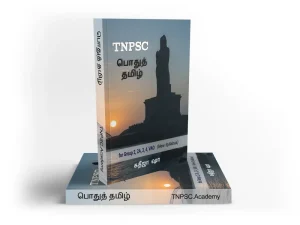 TNPSC பொதுத் தமிழ் Book - for Group 2, 2A, 3, 4 & VAO
Original price was: ₹1,000.00.₹850.00Current price is: ₹850.00.
-
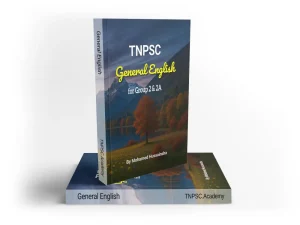 TNPSC General English Book - for Group 2 & 2A
Original price was: ₹1,000.00.₹850.00Current price is: ₹850.00.
Group 1 Courses

Class Tests
PRIVATE 67
TNPSC Group 1 - Test Series - 2019
Original price was: ₹3,500.00.₹2,800.00Current price is: ₹2,800.00. 542
Group 1 | Postal and Online Test Series | 2022
Original price was: ₹3,200.00.₹2,800.00Current price is: ₹2,800.00. 88


Group 2 & 2A Courses

TNPSC Group 2 and 2A MAINS - 2022
PRIVATE 344
TNPSC Group 2 and 2A - Test Series - 2019 - தமிழ்
Original price was: ₹2,400.00.₹1,800.00Current price is: ₹1,800.00. 175Class Tests
PRIVATE 67
TNPSC Group 2 and 2A - Test Series - 2019
Original price was: ₹2,400.00.₹1,800.00Current price is: ₹1,800.00. 527
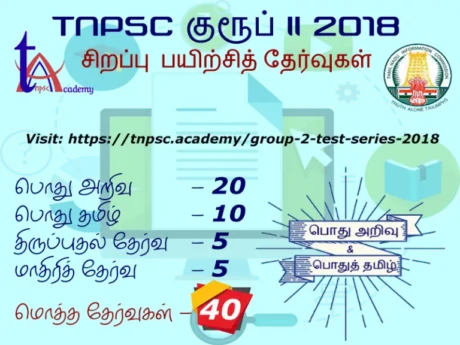

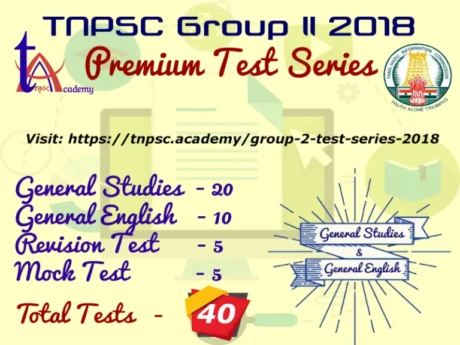



TNPSC – SIMPLIFICATION
Simplification:
Algebraic expressions contain alphabetic symbols as well as numbers. When an algebraic expression is simplified, an equivalent expression is found that is simpler than the original. This usually means that the simplified expression is smaller than the original.
BODMAS RULE:
This rule depicts the correct sequence in which the operations are to be executed, so as to find out the value of a given expression. Here, ‘B’ stands for ‘Bracket’, ‘O’ for ‘of’, ‘D’ for ‘Division’, ‘M’ for ‘Multiplication’, ‘A’ for ‘Addition’, ‘S’ for ‘Subtraction’.
When an expression contains a vinculum (a horizontal line above an expression), before applying the ‘BODMAS’ rule, we simplify the expression under the vinculum.
The next step is to evaluate all the expressions in the brackets. After removing the brackets, we must use the following operations strictly in the following order:
1. of
2. Division, Multiplication
3. Addition, Subtraction
So, the order of precedence is:
V Vinculum first
B Brackets [{(
O Of, Orders (i.e. Powers and Square Roots, etc.)
DM Division and Multiplication (left-to-right)
AS Addition and Subtraction (left-to-right)
SURDS AND INDICES
Types of Surds:
Mixed surds: If one factor of a surd is a rational number and the other factor is an irrational number, then it is called a mixed surd.
Examples: 2√5, -2√3
Pure surds: If a surd has unity as its only rational factor, the other factor being and irrational number, then it is called as pure surd.
Examples: √3, √a
Since surds are irrational numbers, they can be added or subtracted as real numbers. Also a rational number can be added or subtracted from a surd. The result will be a real number.
Examples: √5+3; 2-√7; √3-2
Addition and Subtraction of Surds:
Example: 5√2+20√2-3√2 = 22√2
Example: √45-3√20+4√5 = √5
Multiplying and Dividing Surds:
Surds can be multiplied by using the laws of surds. To multiply or divide surds they have to first be made of the same order.
Examples: √4*√22=√88, √162 √18=3√2, √9=3√2
Laws of Indices:
==> am*an = am+n
==> am/an = am-n
==> (am)n = amn
==> a 1/m = 1/am
==> a0 = 1
Also, (a1/n)n = a
a1/n.b1/n = (ab)1/n
(a1/n)1/m = a1/mn
Examples:
5√43 = (43)1/5 = (43/5)
53*54 = 57
55/52 = 53
Basic formulas:
(a + b)2 = a2 + b2 + 2ab
(a – b)2 = a2 + b2 – 2ab
a2 – b2 = (a + b) (a – b)
(a + b)3 = a3 + b3 + 3ab(a + b)
(a – b)3 = a3 – b3 – 3ab(a – b)
(a + b + c)2 = a2 + b2 + c2 + 2ab + 2bc + 2ca
a3 + b3 + c3 – 3abc = (a + b + c)(a2 + b2 + c2 – ab – bc – ca)
(x + a) (x + b) = x2 + x(a + b) + ab
x3+(1/x3) = [x+(1/x)]3 – 3[x+(1/x)]
x2+(1/x2) = [x+(1/x)]2 – 2 = [x-(1/x)]2+2